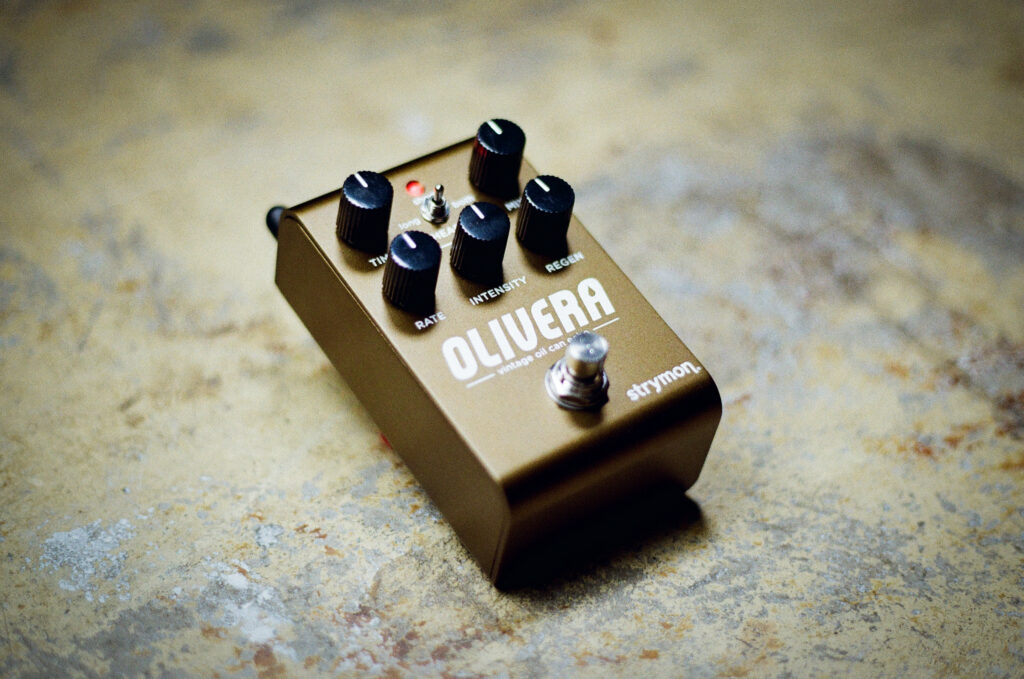
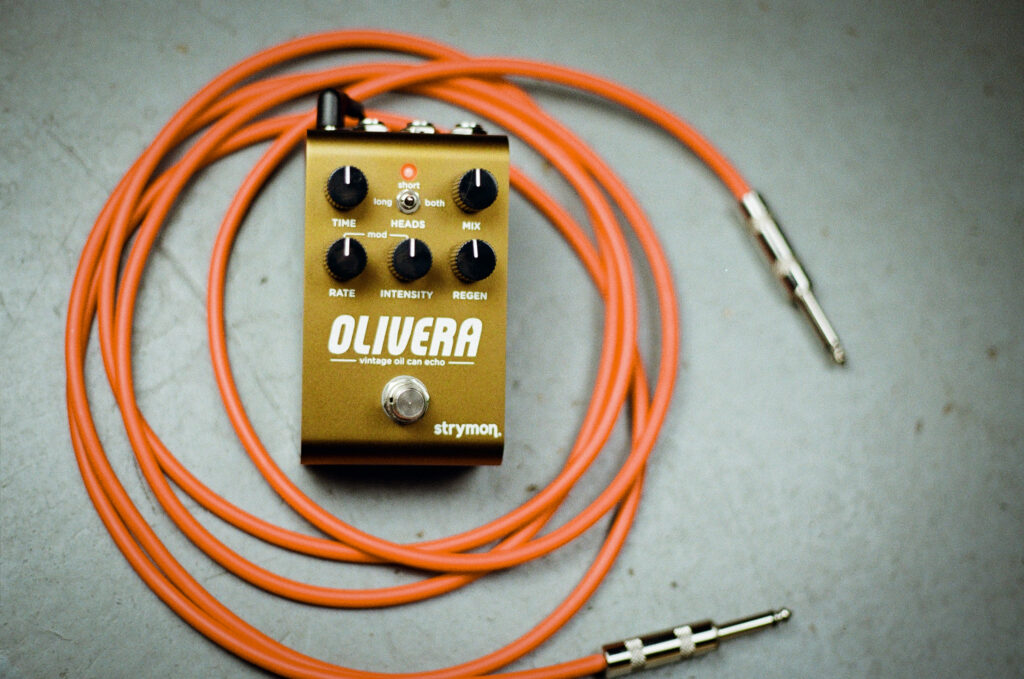
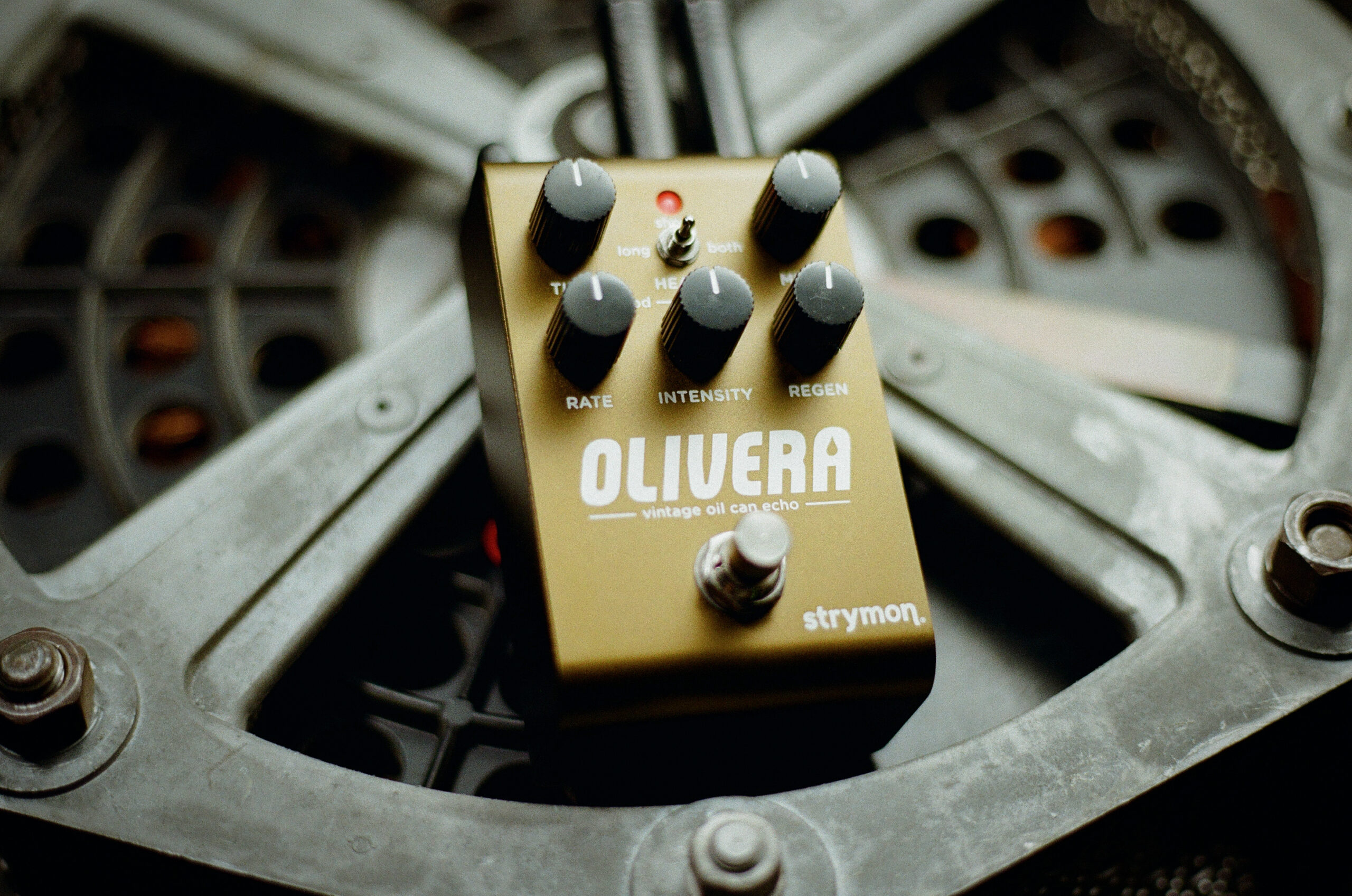
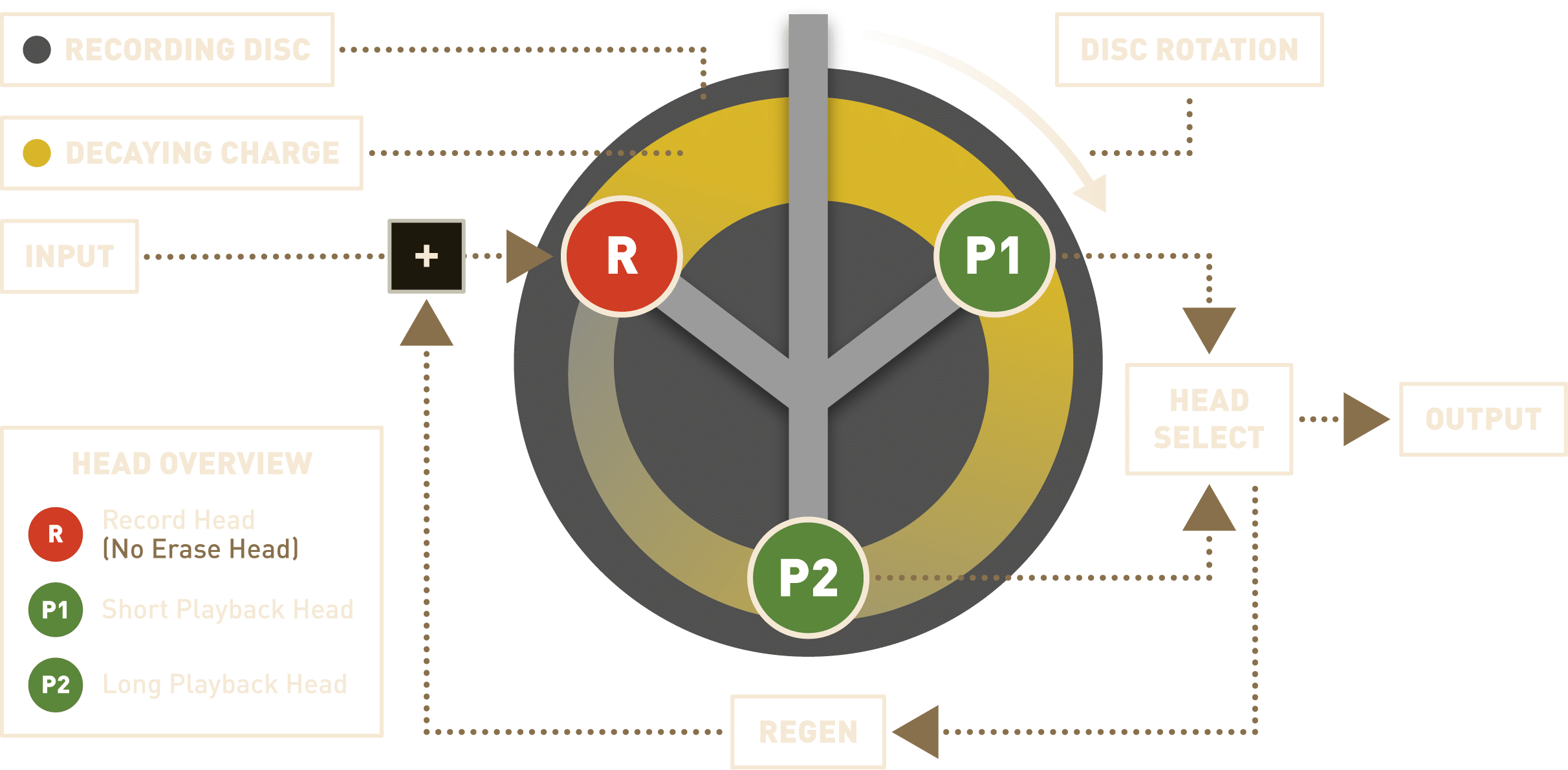
Vintage oil can echo devices are electromechanical units that write a static charge onto a rotating disk housed in a can partially filled with oil. The oil serves as a lubricant that helps retain the charge on the disk. The resultant delay signal is very band limited, creating a murky sounding echo. But that’s not the only quality that gives the oil can echo its atmospheric magic.
The units have a record head and typically two playback heads, but generally no erase head, allowing some dissipating charge to remain as the can rotates. This contributes to two unique characteristics of these systems.
First, it creates a regenerating repeat even when no feedback (REGEN) is applied from the playback heads. The static charge has its own decay time constant, so there are always “repeats” from the echo at all settings.
Second, it creates an uneven cadence to the echoes, where the first echo occurs based on the distance from the record head to the playback head. But subsequent echoes occur at the rotational speed of the system as the dissipating signal comes back around on the disk. The resultant off-kilter delay cadence is largely responsible for creating the sense of atmosphere without a strong “rhythmic” element.
By adding feedback (REGEN) from the playback heads, and/or combining the output of the two heads, the atmospheric nature of the echoes increases.